
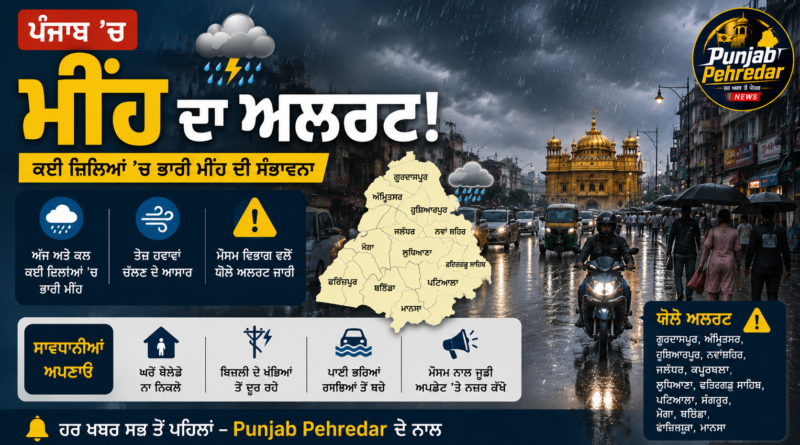
Punjab Rain Alert: IMD Predicts Heavy Rainfall on August 17-18, Yellow Alert Issued
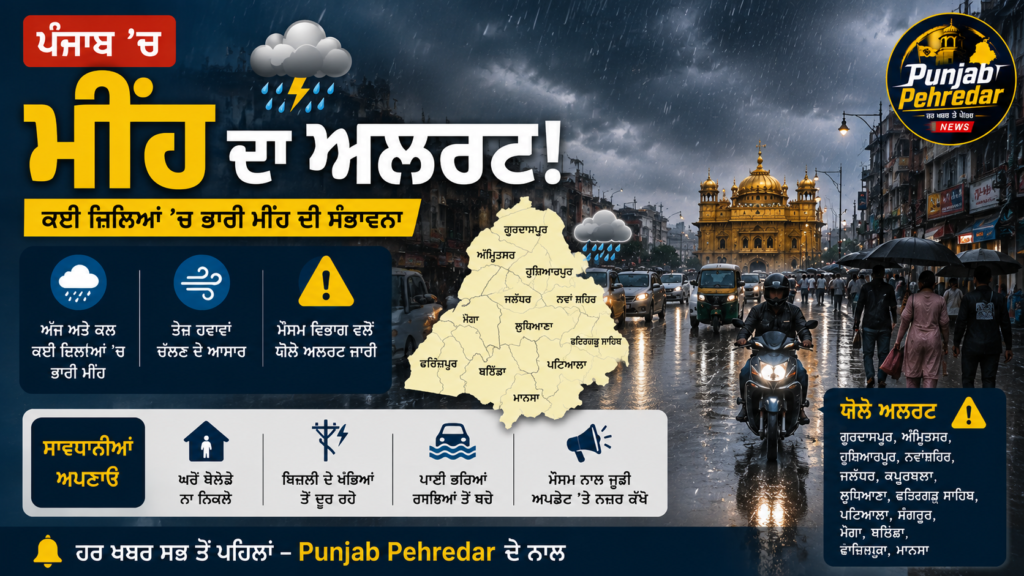
Punjab Rain Alert: The India Meteorological Department (IMD) has issued a yellow alert for Punjab, forecasting fairly widespread to widespread rainfall on August 17 and 18, following an earlier spell on August 15. Residents across the state, especially in low-lying and flood-prone districts, are advised to stay alert as the monsoon trough remains active over the region this week.
Key Highlights
| Particulars | Details |
|---|---|
| Alert Level | Yellow Alert |
| Affected Region | Punjab, Haryana, Chandigarh, Delhi |
| Rain Dates | August 17 and 18, 2026 |
| Issued By | India Meteorological Department (IMD) |
| Monsoon Status | Below long-period average by 34% in Punjab so far this season |
What the Punjab Rain Alert Means for You
According to the IMD bulletin, fairly widespread to widespread rainfall is expected over Punjab, Haryana, Chandigarh, and Delhi on August 17 and 18. Isolated to scattered rainfall is likely on the other days this week. The department has also forecast heavy to very heavy rainfall over parts of the western Himalayan region, including Himachal Pradesh, Jammu & Kashmir, and Uttarakhand — a factor that has historically raised dam and river levels affecting downstream districts of Punjab.
Despite this spell, the state’s overall monsoon rainfall since June 1 remains well below normal, with monsoon activity over the past few days described as “weak.”
Districts to Watch
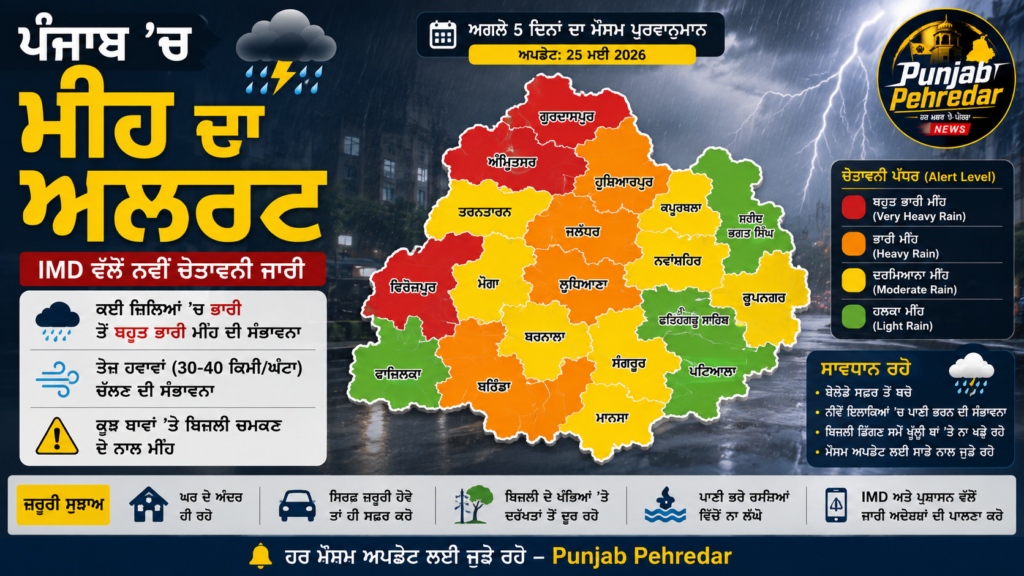
Based on the current system, districts that have seen rainfall activity in recent weeks and are likely to be affected again include:
- Pathankot
- Gurdaspur
- Amritsar
- Tarn Taran
- Hoshiarpur
- Fatehgarh Sahib
- Patiala
(Exact district-wise intensity can shift with each IMD update — always check the latest bulletin before making travel or outdoor plans.)
Safety Tips During Heavy Rain
- Avoid unnecessary travel through low-lying or waterlogged roads and underpasses
- Keep an eye on local dam and river water-level updates, especially if you live near the Sutlej, Beas, or Ravi
- Secure loose outdoor items ahead of possible gusty winds and thunderstorms
- Keep mobile phones charged and follow official district administration updates for any school closures or advisories
- Farmers should avoid pesticide/fertilizer spraying during the alert period and take precautions for standing crops
Why This Matters
Punjab experienced severe flooding in August 2025, when heavy monsoon rain and rising dam levels affected over 1,400 villages across more than a dozen districts. While this week’s yellow alert is a lower-severity warning, it comes during a period when officials and residents remain cautious about dam levels and drainage in flood-prone belts.
This article is based on IMD forecasts and is for general information only. Weather predictions can change; always refer to the latest official IMD bulletin or your district administration for real-time alerts and advisories.

What Does a Yellow Alert Actually Mean?
The IMD uses a four-color warning system to help the public gauge how seriously to take a weather forecast: green (no action needed), yellow (be aware), orange (be prepared), and red (take action). A yellow alert, like the one currently in effect for Punjab, means the weather situation should be watched closely but does not yet call for major precautionary measures such as school closures or travel bans. It typically signals moderate to heavy rain that could cause localized waterlogging or minor disruption, rather than severe flooding.
That said, yellow alerts in Punjab have escalated quickly in the past when rainfall combines with rising water levels from upstream dams in Himachal Pradesh. Residents in districts along the Sutlej, Beas, and Ravi rivers are advised to keep an eye on updates from the Punjab State Disaster Management Authority in addition to the IMD, since river and dam-level bulletins are issued separately and can shift the risk picture within hours.
For daily commuters and farmers especially, checking the IMD’s regional bulletin each morning during this alert period is a simple habit that can help avoid last-minute disruption.