

Punjab High Court Gratuity Ruling: Exit Requests Must Follow Service Rules Strictly
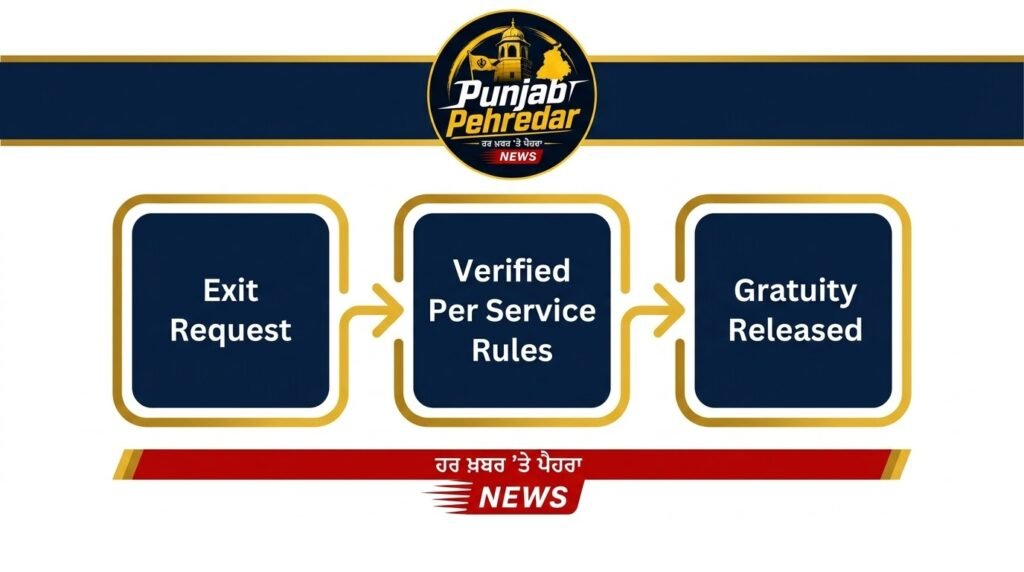
Punjab High Court Gratuity Ruling this week directed the governments of Punjab, Haryana, and Chandigarh to ensure that employees’ exit requests are processed strictly in accordance with service and pension rules, aiming to prevent avoidable disputes over gratuity and pension payouts. The direction, issued by Justice Namit Kumar, adds to a growing body of rulings from the same bench addressing delays and irregularities in how retirement benefits are handled across the region.
Key Highlights
| Particulars | Details |
|---|---|
| Directive Issued By | Justice Namit Kumar |
| States Covered | Punjab, Haryana, Chandigarh |
| Core Direction | Process exit requests strictly per service and pension rules |
| Aim | Prevent disputes over gratuity and pension |
Why This Directive Matters
For government employees nearing retirement, gratuity and pension disputes can mean months or even years of delay in receiving benefits they’re legally entitled to. The Punjab High Court Gratuity Ruling reflects a recurring concern the court has flagged: administrative lapses at the “exit” stage — when an employee’s retirement paperwork is being finalized — often become the root cause of later disputes, sometimes only resolved through litigation years after the employee has actually retired.
Part of a Larger Pattern
This isn’t an isolated ruling. Justice Namit Kumar’s bench has repeatedly emphasized that retirement benefits were a valuable statutory right and not a matter of grace, most notably in an earlier case involving a retired Assistant Sub Inspector whose gratuity was withheld for years over a pending FIR that had never even resulted in formal charges. In that case, the court ordered the state to pay interest on the delayed gratuity, underlining that administrative caution cannot come at the cost of an employee’s legally guaranteed dues.
Separately, another bench of the same High Court has directed the Chief Secretaries of Punjab, Haryana, and Chandigarh to fix personal responsibility on officials responsible for delays in pension processing, ruling that the “Head of Office” — the official responsible for initiating an employee’s retirement paperwork — bears direct accountability for such lapses.
What “Strictly Under Service Rules” Actually Means
For employees preparing to retire, this directive signals that departments will likely face closer scrutiny on how promptly and accurately they process exit paperwork — from verifying service records to correctly calculating dearness allowance components used in gratuity and leave encashment calculations. Retiring employees may want to begin verifying their own service records well ahead of their retirement date, given how often such disputes stem from incomplete or delayed documentation on the department’s end rather than any fault of the employee.
What This Means for Government Employees
The Punjab High Court Gratuity Ruling is likely to be welcomed by employee unions and pensioner associations, who have long flagged administrative delays as a persistent grievance — a concern that has also surfaced in recent organized protests by employee and pensioner groups across the state. With the court now directing stricter compliance at the point of exit itself, rather than only intervening after disputes arise, the ruling could meaningfully reduce the volume of gratuity-related litigation reaching the High Court in the years ahead.
This article is based on court proceedings as reported by regional legal news sources as of publication. For specific case details, refer to the Punjab and Haryana High Court’s official records.