
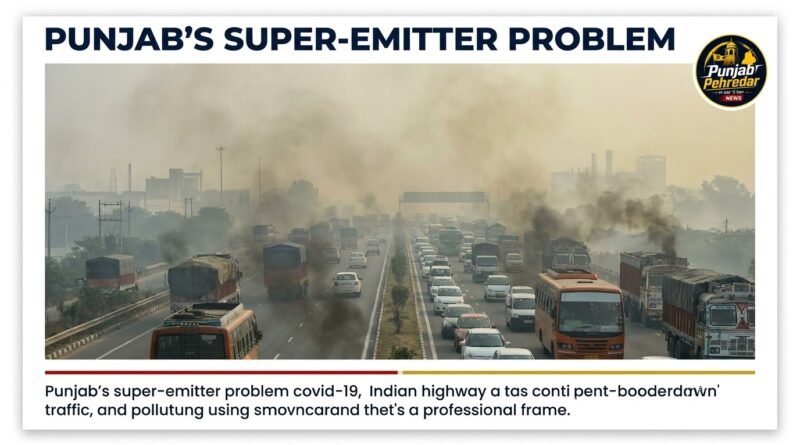
Punjab Vehicle Pollution Study: Super-Emitters Cause 70% of Transport Emissions
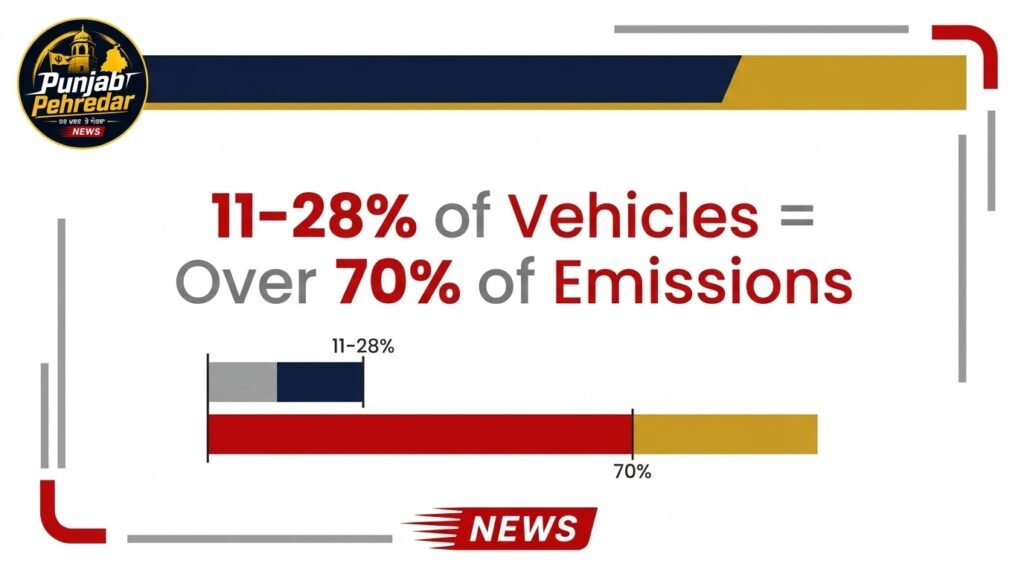
Punjab Vehicle Pollution Study findings released this week reveal a striking imbalance: so-called “super-emitters” — vehicles that pollute far more than the average — make up only 11% to 28% of Punjab’s vehicular fleet, yet contribute to more than 70% of the state’s transport emissions. The findings come from a new report titled “Pathways for Clean Transportation in Punjab,” prepared by the Center for Study of Science, Technology and Policy (CSTEP).
Key Highlights
| Particulars | Details |
|---|---|
| Super-Emitters’ Share of Fleet | 11% to 28% |
| Share of Total Transport Emissions | Over 70% |
| Vehicles Eligible for Scrappage | Approx. 3 lakh |
| Scrapping Facilities Needed | 15 (only 5 currently operational) |
| Investment Needed for New Facilities | Approx. ₹140 crore |
What Counts as a “Super-Emitter”
Super-emitters are typically vehicles that are old, poorly maintained, overloaded heavy-duty vehicles, or some combination of all three, releasing significantly higher pollutant levels than the rest of the fleet. The Punjab Vehicle Pollution Study found that although Heavy Commercial Vehicles (HCVs) make up just 1.6% of Punjab’s total vehicle fleet, they alone emit around 2,102 tonnes of particulate matter (PM2.5) annually. In sharp contrast, two-wheelers — which make up the majority of vehicles on Punjab’s roads — contribute only about 228 tonnes per year of the same pollutant, despite their far greater numbers.
Where the Study Came From
The report was released at the India Clean Air Summit (ICAS) 2026, and surveys underpinning its findings were conducted across six Punjab districts — Patiala, Ludhiana, Amritsar, Jalandhar, Moga, and Hoshiarpur. Notably, the survey data showed that 89% of vehicles plying Punjab’s roads were registered within the state itself, indicating that a strong state-level regulatory framework could meaningfully reduce transport emissions without needing extensive inter-state coordination.
The Scrappage Bottleneck
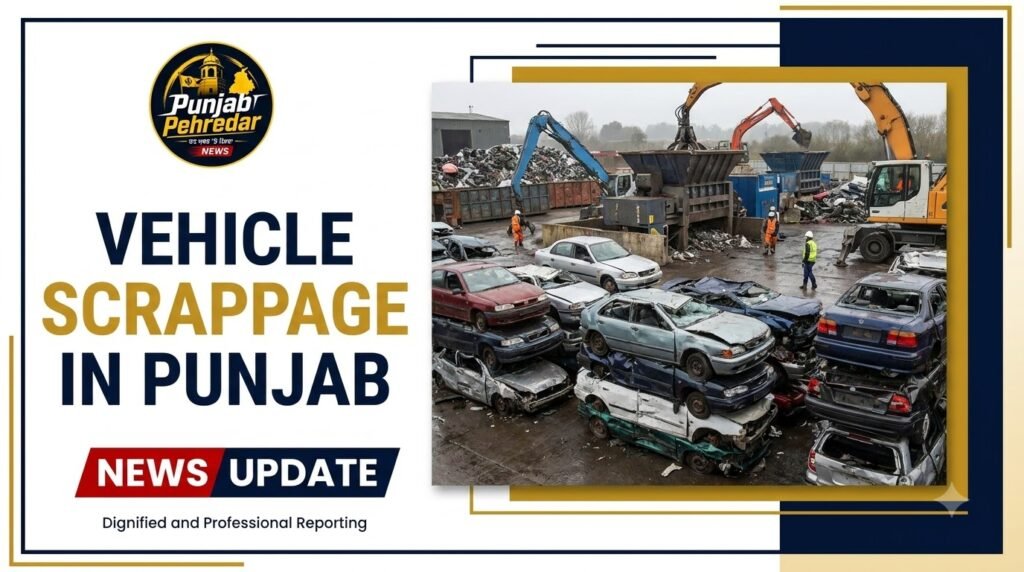
The Punjab Vehicle Pollution Study estimates that approximately 3 lakh vehicles in the state may currently qualify for scrappage under existing norms. However, Punjab has only five operational registered vehicle scrapping facilities (RVSFs), well short of the 15 the study says are needed to handle this volume. Building the additional 10 facilities would require an estimated investment of around ₹140 crore — a significant but not implausible figure given the scale of the pollution problem the study highlights.
An Aging Fleet Problem
The survey also found that vehicles aged 10 to 15 years continue to operate widely across categories, particularly among three-wheelers and the commercial fleet. Combined with the finding that a large share of cross-district vehicle movement happens entirely within Punjab, the study suggests that targeted state-level interventions — stricter fitness certification, incentivized scrappage, and expanded scrapping infrastructure — could deliver outsized emissions reductions relative to the number of vehicles actually targeted.
What This Could Mean Going Forward
If Punjab moves to act on these findings, expect discussion around incentivized scrappage schemes, stricter enforcement of fitness certificates for older commercial vehicles, and possibly targeted restrictions on the oldest, highest-emitting HCVs in high-traffic districts. Given that just a fraction of the fleet is responsible for the bulk of transport pollution, policy focused specifically on this “super-emitter” segment could offer a more cost-effective path to cleaner air than broad restrictions covering the entire vehicle population.
This article is based on the CSTEP study findings as reported by regional news sources as of publication. For the full report, refer to the Center for Study of Science, Technology and Policy’s official publications.